EDC Catena-X
Overview
The Eclipse Dataspace Connector (EDC) is an open-source framework designed to enable secure, interoperable, and sovereign data sharing across organizations. When integrated with Catena-X, it supports the automotive industry's vision of a standardized, collaborative data ecosystem. Catena-X leverages EDC to facilitate trusted data exchange between manufacturers, suppliers, and partners while adhering to strict privacy and sovereignty principles.
Why EDC for Catena-X?
- Data Sovereignty: Maintain control over your data with fine-grained access policies.
- Interoperability: Seamlessly connect with other Catena-X participants using standardized APIs.
- Security: Encrypted communication and authentication mechanisms to protect sensitive data.
- Scalability: Designed to handle large-scale industrial data exchanges.
How we create assets in EDC
This section outlines the data flow and interaction between PROVE, Amazon S3 (S3), the Eclipse Dataspace Connector (EDC), and DataspaceOS within the Catena-X ecosystem, focusing on creating and managing assets like Digital Product Passports (DPPs).
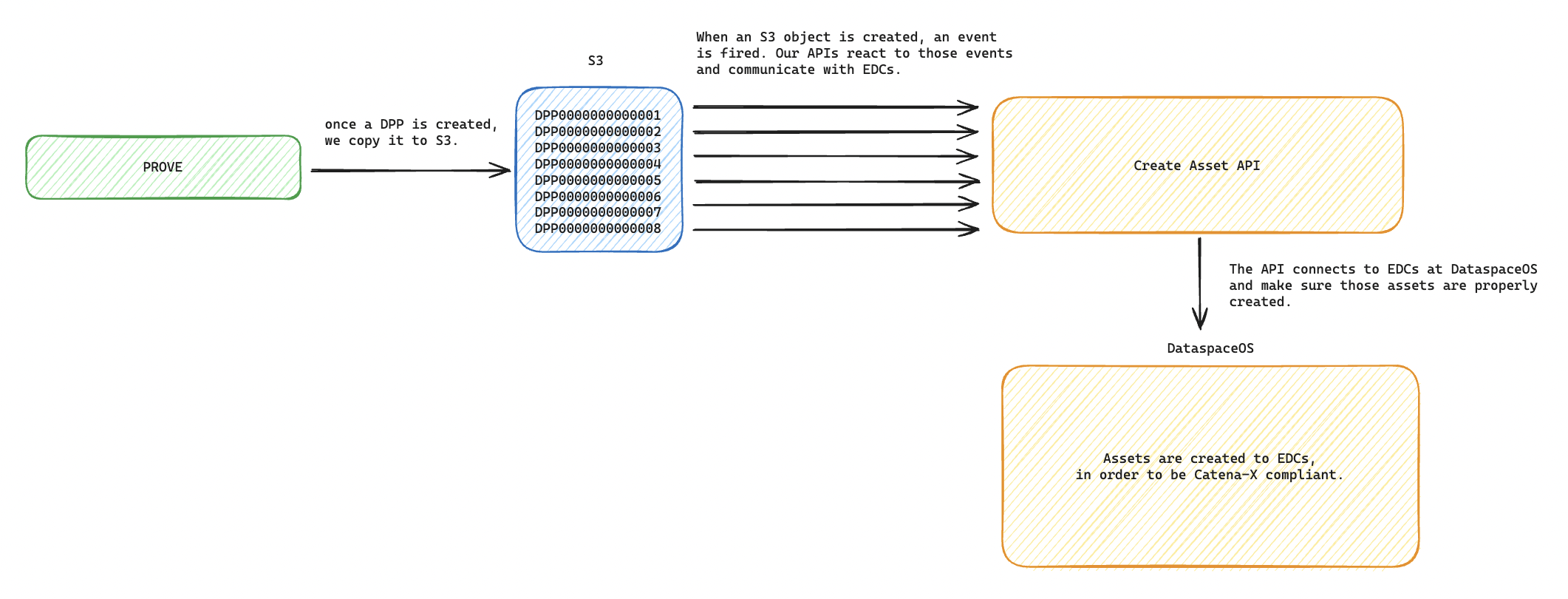
- PROVE Data Generation PROVE, generates a Digital Product Passport (DPP). Once a DPP is created, PROVE copies this data to an Amazon S3 storage bucket for secure and scalable storage.
- S3 Event Trigger and EDC Communication When a DDP is stored in the S3 bucket, an event is fired. APIs monitoring these S3 events react to the creation and communicate with the Eclipse Dataspace Connector (EDC) hosted on DataspaceOS. This ensures that the data is recognized and prepared for further processing within the Catena-X network.
- Creating Assets via EDC API The "Create Asset API" is invoked to register the DPP or data object as an asset within the EDC framework. This API connects to the EDC DataspaceOS, ensuring that the assets are properly structured and compliant with Catena-X standards.
How Consumers Access Assets
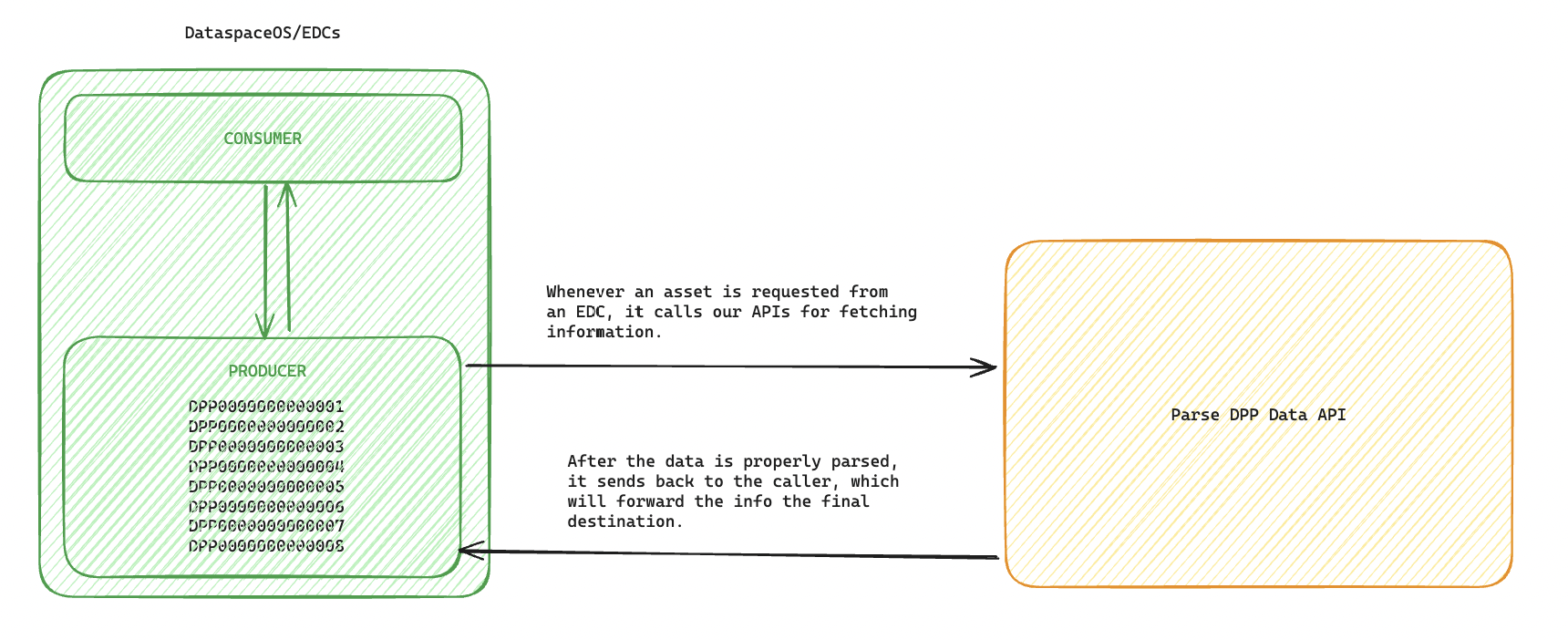
Consumers can access assets stored within the EDC framework through the following steps:
- Consumer Request
- A Consumer (e.g., a Catena-X participant like a manufacturer or supplier) initiates a request for an asset (such as a DPP) from the DataspaceOS/EDC system.
-
The request is directed toward Circulor's EDC implementation, which manages the asset exchange process.
-
EDC Asset Request
- Whenever an asset is requested from EDC, the system triggers an internal process to locate and access the asset from the Producer.
-
The EDC framework uses its APIs to facilitate communication between the Consumer and Producer, ensuring secure and sovereign data exchange.
-
Parsing DPP Data via API
- The "Parse DPP Data API" is invoked to fetch and process the requested information from the Producer.
-
This API retrieves the raw data (e.g., DPP details) and ensures it is properly parsed and formatted for use.
-
Data Delivery to Consumer
- After the data is properly parsed and validated, it is sent back to the Consumer, which initiated the request.
Purpose and Benefits
- This workflow enables secure, standardized, and efficient retrieval of assets like DPPs within the Catena-X ecosystem, supporting use cases such as product traceability, compliance verification, and supply chain collaboration.
- It leverages EDC’s capabilities for data sovereignty and interoperability, ensuring that data is exchanged securely between participants while adhering to Catena-X’s open-source, collaborative standards.